Forge Siding serves homeowners, property managers, and commercial clients throughout USA with the same licensed crews, the same upfront pricing, and the same documented close-out process regardless of location.

Our USA operation covers residential projects — new construction, full replacements, and targeted repairs — as well as commercial and multi-family cladding for property managers and HOA boards throughout US. The same standard of documentation and workmanship applies to every project regardless of location.
We've watched enough regional siding contractors come and go in USA to know what separates a company that lasts from one that doesn't: it's the quality of the written estimate, the transparency of the project communication, and the honesty of the close-out process. Our US reputation is built on all three.

Most US homeowners don't discover siding failure until the damage is already inside the wall. These are the early warning signs that make a meaningful difference when caught first.
Hairline fractures look minor from the ground. At arm's reach, they're a different story — especially on fiber cement, where surface spalling around impact points creates water entry that accelerates sheathing damage.
Moisture staining on drywall adjacent to exterior walls, soft spots when you press the wall surface, or a persistent musty odor in rooms with exterior exposure all indicate water has been working through the building envelope. By the time interior symptoms appear, the sheathing has usually been wet for weeks.
Buckled vinyl almost always points to panels installed without adequate expansion room — nailed too tight to absorb thermal movement across USA's seasonal temperature swings. As the deformation progresses, the panel lock opens at high-heat peaks, creating gap points for wind and water.
Short paint-life cycles on wood siding — peeling within two to four years of a fresh coat — almost always trace to moisture migrating through the panel from the back face. Repainting without addressing the underlying moisture source repeats the failure cycle indefinitely.
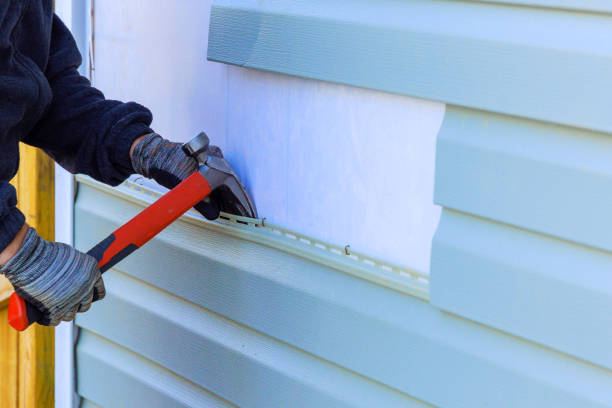
Dark streaking from nailheads on vinyl or fiber cement siding indicates non-galvanized or insufficiently corrosion-resistant fasteners. As fasteners corrode, they weaken and eventually fail — a panel secured by a corroded nail is a panel waiting to separate in a windstorm.
{{A compromised siding system — failed housewrap, missing caulk at penetrations, gaps at panel joints — creates air infiltration pathways that significantly increase HVAC load. If your energy bills in US have risen without a clear explanation, the building envelope is worth investigating before assuming appliance or insulation issues.|Wall air leakage through siding system failures can account for 10-20% of heating and cooling load in USA climates. A proper siding repair or replacement that restores the envelope's air-sealing function often produces measurable utility savings within the first full heating or cooling season.}}
Our statewide Wood Siding operation maintains consistent service standards across every USA community we work in.
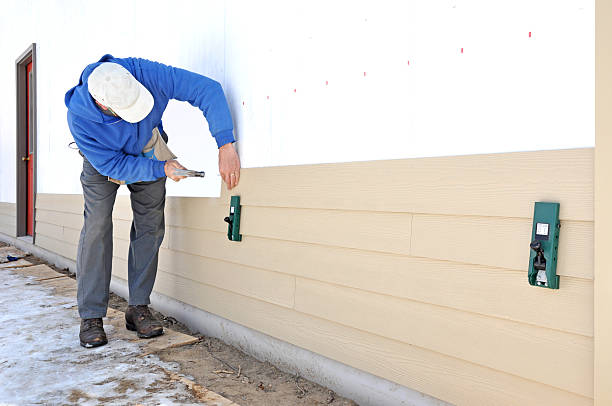
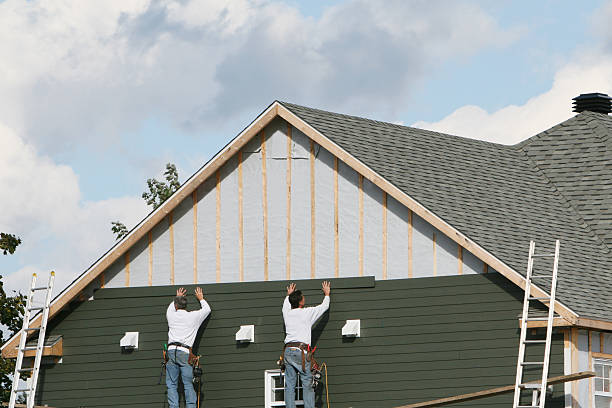
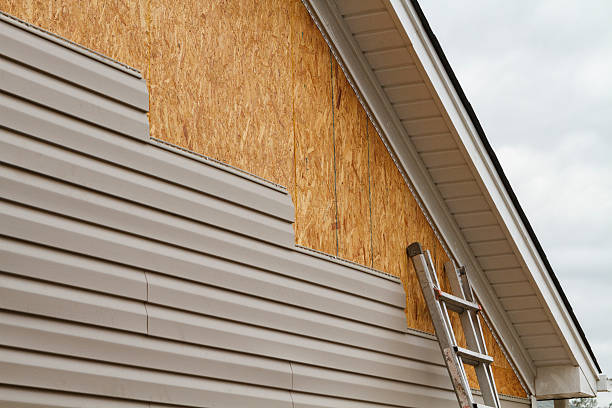
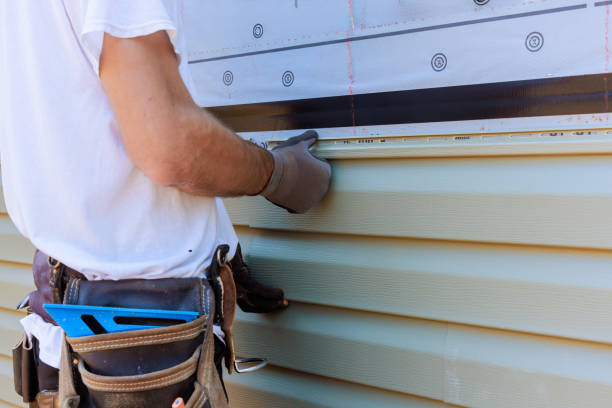
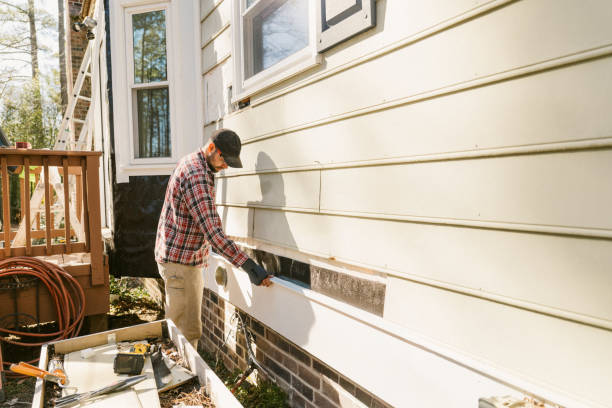
New residential siding in USA covers the full installation scope: housewrap, flashing at penetrations, panel installation per manufacturer specification, and complete trim systems at corners, windows, doors, and the roofline. We handle full tear-off replacements on existing homes and new construction installation alongside framing crews and GCs. Our USA installation teams are certified on vinyl, fiber cement, engineered wood, and steel panel systems — with the installation documentation to preserve manufacturer warranty coverage on every product.

Emergency response in USA is available 24 hours a day. Our dispatch line connects to a real person who triages the exposure risk and deploys a crew based on actual severity — not a queue position.

Each cladding material has distinct installation requirements, and our USA crews hold certifications specific to each product they install. Fiber cement requires back-priming at every field cut, specific fastener types, and a documented fastener schedule for warranty preservation. Vinyl requires correct expansion gap calibration for USA's seasonal temperature range. Wood siding demands moisture content testing at delivery, species-appropriate nailing patterns, and end-grain sealing at every butt joint. We don't apply one generic installation approach across all materials.

Commercial siding projects throughout USA require a different operational approach than residential work: engineered wind-load fastener schedules, special inspection documentation in applicable jurisdictions, coordination with building management on occupied-building scheduling, and standardized reporting for HOA board records and reserve fund planning. Our USA commercial team handles all of these requirements as standard practice — not as extras that require additional conversations.

Consistency matters in a statewide operation. The same pricing transparency, the same installation standards, and the same warranty documentation apply whether the project is in a major USA city or a smaller community.
Our written estimates become the project contract. The final invoice reflects the contracted scope. Change orders for unforeseen conditions are written and approved before any additional work is performed.
We operate from locally based dispatch points across US — not a single regional hub routing every job statewide. Local crews mean faster response, familiarity with local building departments, and practical ability to follow up quickly after project completion.
Our US contractor license is current, disciplinary-history-free, and publicly verifiable in the state database. We provide the license number at first contact and actively encourage verification. GL and workers' comp certificates are available before project start.
Every project in US closes with a signed workmanship warranty document — specific about what's covered, for how long, and how to invoke it. Not a verbal assurance — a document you can file, reference, and enforce.
No process differences between markets. Every USA client gets the same communication cadence, the same documentation standards, and the same warranty package.
Scheduled within 24–48 hours of your call. We measure all surfaces, document existing conditions with photos, and probe for substrate moisture issues before building the estimate.
The estimate is the document that becomes the contract. Everything in the project's scope is visible before you sign.
We handle permit applications where required throughout US. Start date confirmed in writing with the crew assignment. Material ordered against confirmed schedule — nothing staged before it's needed, nothing missing on day one.
Daily progress updates from the lead installer. Unexpected findings documented with photos and handled via written change order before additional work proceeds. Site cleaned each afternoon before the crew leaves.
The close-out package is the same across all USA projects — complete documentation that serves as the record for insurance, HOA, and resale purposes.
They handled the HOA board documentation — permits, warranty registrations, per-building project photos — without us having to ask. Everything was organized and delivered before final payment.
Full replacement across our USA property. Fiber cement, correctly installed, with a fastener log and warranty registration in our name. That documentation is worth as much as the installation itself when it comes time to sell.
Verified the license, called two references, checked the insurance certificate. Every piece of documentation was exactly as represented. Project ran on schedule and on budget.
Pre-listing inspection identified two problem areas that would have flagged in the buyer's inspection. Fixed both before listing — total cost was a fraction of what a buyer credit would have been. The inspection paid for itself immediately.
We had a warranty question about a caulk joint 14 months after completion. Called the office, the lead installer came back within three days and addressed it at no charge. That's what a written guarantee actually looks like in practice.
The permit and inspection process was completely handled without us. The inspector came, signed off, and we received the permit record in the close-out package. I've done projects where chasing the permit took weeks — this was invisible to us as homeowners, which is exactly how it should work.
Forge Siding provides residential and commercial Wood Siding throughout USA from locally based dispatch crews. We don't have a single statewide hub routing every job through a central office — our dispatch structure keeps crews close to the projects they're assigned to, which means faster response, better familiarity with local permit offices, and practical ability to return quickly for any follow-up.
Our USA dispatch team handles residential repairs, full replacements, commercial projects, and emergency response statewide. Call now for a free estimate and a written scope from a licensed contractor.
📞 Call Now: +1-844-782-0929